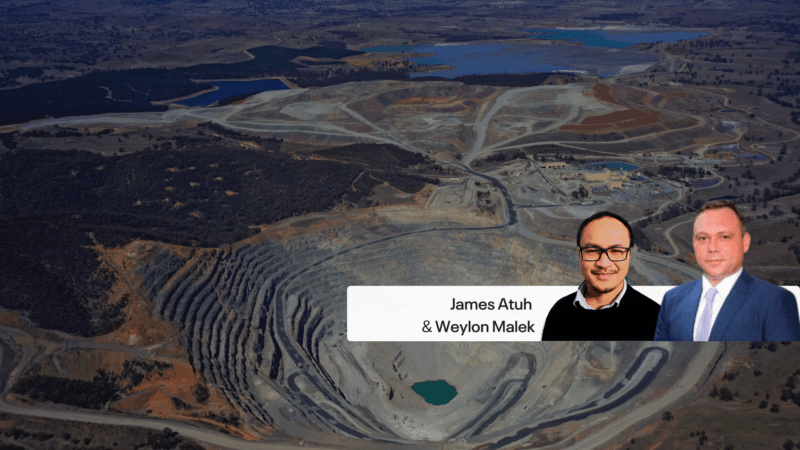
We recently hosted a mining-focused webinar featuring two experienced asset management practitioners, James Atuh and Weylon Malek, to explore how mining operators can improve returns on constrained maintenance budgets through structured, risk-based reliability strategies. The discussion cut through theory and focused on what truly drives value in mining environments: aligning maintenance effort with operational risk, business priorities, and production continuity.
Throughout the session, one theme was clear: reliability excellence in mining is not achieved through isolated initiatives. It is built on a structured foundation, starting with an understanding of your organization’s asset management maturity, aided by a clear understanding of asset criticality, and operationalized through the implementation of a Reliability-Centered Maintenance (RCM) program, with digital enablement ensuring long-term scalability and governance.
Mining Under Pressure: Why Structure Matters Now
Today, mining operations operate in a high-stakes environment. Assets are capital-intensive, production targets are aggressive, and safety and sustainability expectations continue to rise. The fate of critical equipment, such as crushers, mobile equipment, conveyors, and excavators, directly determines production continuity. When these assets fail, the financial and operational consequences escalate quickly.
At the same time, many mining organizations are still evolving from reactive or maintenance-driven cultures toward structured, risk-based asset management. While some companies have highly mature reliability programs embedded across the enterprise, others continue to rely heavily on corrective maintenance, even if executed with pride and technical skill.
The challenge is not capability. It is alignment.
The central questions raised in the webinar were:
- How do we focus reliability efforts on the assets that truly matter to the business?
- How do we ensure that maintenance strategies align with operational risk and business objectives?
Answering these questions requires a disciplined approach.
Step One: Understanding Asset Management Maturity
Before investing in RCM programs or digital tools, organizations must understand their current state. A maturity assessment aligned with principles such as those outlined in ISO 55000 provides a structured baseline across governance, strategy, lifecycle management, risk integration, data utilization, and organizational capability.
This is not an academic exercise. It creates clarity.
A structured maturity assessment identifies strengths, capability gaps, and areas where investment will generate the greatest impact. It also enables leadership alignment by translating asset management performance into business terms such as risk, cost, safety, and value creation.
Without this baseline, reliability initiatives risk becoming fragmented projects rather than sustained programs.
Asset Criticality Analysis: The Foundation of Focus
If maturity defines direction, Asset Criticality Analysis (ACA) defines focus.
One of the most important takeaways from the webinar was the role of the ACA as the foundation of any serious reliability strategy. Not all assets are equally critical, despite what operations may initially claim. A data-driven criticality model, grounded in corporate risk matrices and cross-functional debate, creates a clear distribution of risk across the asset base.
In high-performing organizations, this process is not performed in isolation. It involves engineering, reliability, operations, and leadership. It requires structured scoring, calibration, and executive ownership.
When implemented correctly, ACA delivers multiple benefits:
- It identifies the small percentage of assets that truly drive operational risk.
- It enables capital allocation decisions based on comparable risk profiles.
- It informs shutdown planning and maintenance prioritization.
- It creates enterprise-wide alignment from pit to port.
Most importantly, it ensures that RCM is applied where it delivers the greatest return – on the top tier of truly critical assets.
RCM in Mining: From Analysis to Measurable Impact
Reliability-Centered Maintenance remains one of the most powerful engineering methodologies available to mining organizations when applied with discipline and context.
The webinar illustrated how combining RAM analysis with RCM can uncover the weakest links in a production chain. In one case, conveyor systems were identified as a bottleneck affecting throughput and safety. The RCM process did more than redefine maintenance tasks. It exposed storage deficiencies, installation practices, component quality issues, and systemic risks related to rollers and pulleys.
The result was not an incremental improvement. It was a structural change:
- Reduced unplanned shutdowns.
- Improved safety by minimizing reactive interventions.
- Standardized installation procedures.
- Optimized spare parts planning.
- Significant revenue uplift through increased throughput stability.
RCM, when executed properly, drives operational control. It replaces reactive firefighting with planned precision. It reduces stress across production teams and creates a predictable maintenance rhythm aligned with business objectives.
However, the webinar also highlighted a critical truth: performing high-quality RCM studies is only half the battle.
The Scalability Challenge: Why Digital Enablement Is Essential
Many mining organizations are able to conduct excellent RCM analyses yet struggle to sustain and scale them. Studies are often stored in spreadsheets, local files, or disconnected reports. Knowledge remains siloed. Strategies drift over time. Lessons learned at one site fail to propagate across the fleet. This is where digital enablement becomes transformative.
A structured digital RCM environment allows organizations to:
- Standardize maintenance strategies across fleets.
- Govern and version-control analyses.
- Align strategies with evolving operational risk.
- Reuse knowledge across similar asset classes.
- Institutionalize reliability expertise beyond individual roles.
Digital RCM is not about automation for its own sake. It is about embedding reliability knowledge into the asset management system itself, so that it survives workforce turnover, geographic dispersion, and organizational growth.
In mining environments with global footprints and large homogeneous fleets, such as trucks, conveyors, and rotating equipment, the value of shared, governed reliability intelligence is exponential.
Reliability Excellence Is Built, Not Bought
If there was one overarching message from the discussion, it is this:
Reliability excellence in mining is not achieved through isolated tools or one-off projects. It is built through a structured progression:
- Understand your asset management maturity.
- Identify and prioritize critical assets through ACA.
- Apply RCM rigorously to those assets that truly drive risk.
- Digitally enable and scale the program across the enterprise.
When these building blocks are harmonized, mining organizations move beyond reactive maintenance and fragmented initiatives. They achieve stabilized operations, improved safety performance, optimized maintenance costs, and sustained production continuity.
In an industry where unplanned downtime translates directly into millions in lost revenue, and where safety remains paramount, structured, risk-based reliability is not optional.
It is a strategic imperative.

准备好演示了吗?
您准备好观看 IMS 套件的实际操作了吗?请填写下表预约演示!