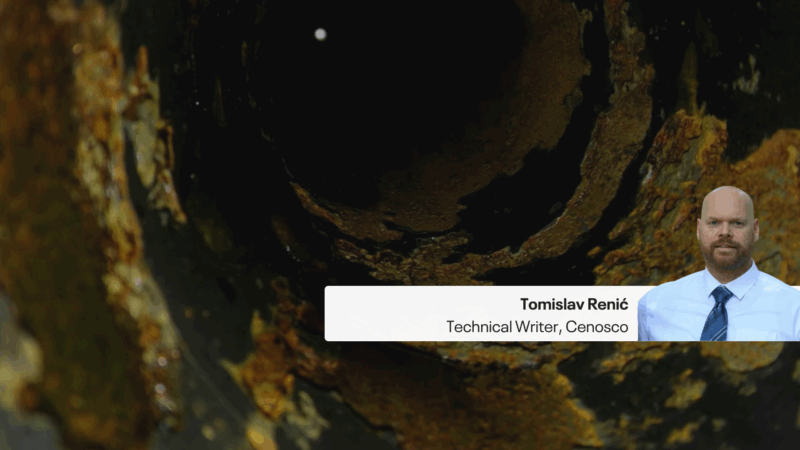
管道腐蚀是指管道材料随着时间的推移与周围环境发生化学反应而开始退化或变弱。
Process industries and pipeline operators battle corrosion as one of their biggest challenges. Failure to manage corrosion can lead to leaks, explosions, and costly downtime.
A NACE International study from 2013 pegged global corrosion costs at $2.5 trillion, over 3% of worldwide GDP. Therefore, understanding and managing corrosion can help save millions of dollars in reduced capital costs and reduced downtime.
什么是管道腐蚀?
Corrosion of pipelines, pipes, or really any corrosion is, simply stated, the degradation of metals into more chemically stable oxides through interaction with their surroundings. Process piping and pipelines demand we focus primarily on the fluids they transport.
各种过程都可能导致腐蚀:
- 化学反应:管道中输送的流体与环境中的化学物质相互作用,会导致腐蚀。例如,加工流体中的氧气、二氧化碳、硫化氢和有机酸都会导致腐蚀,与海水或腐蚀性土壤接触也会导致腐蚀。
- 微生物腐蚀:加工流体中的某些细菌会产生酸性物质,导致管道腐蚀。
- 磨损:流经管道的颗粒或流体会磨损管道,导致管道腐蚀。
- Electrochemical reactions: When different types of metals are in contact with each other, electrochemical reactions can occur, leading to corrosion.
- 缺乏维护:不维护管道也会造成管道腐蚀。
如何管理腐蚀?
Pipeline corrosion management requires a well-informed approach. On top of that, you can model key processes to calculate corrosion rates.
Understanding the processes that lead to corrosion allows for the development of preventative maintenance programs to manage corrosion. Any corrosion mitigation strategy should consider several key factors:
- 材料选择:管道、水井和其他工艺设备可由各种合金设计和制造,并可使用或不使用管道保护涂层。各种管道的成本差异很大,选择合适的材料会影响项目的可行性。
- 缓蚀剂:这些化学品可添加到管道输送的流体中,以降低腐蚀率。
- 管道涂层:可在管道上涂抹水泥或环氧树脂等保护涂层,以防止管道腐蚀。
- Inspection and Monitoring: Process equipment can be inspected using nondestructive testing, visual observations, or material sampling to identify corrosion rates. Corrosion models can be calibrated using real-life observations to optimize future inspection schedules and prevent unexpected downtime.
- 定期维护:按计划对管道进行适当的清洁和维护有助于防止腐蚀。对管道进行清洗以清除积聚的碎屑和使用成膜腐蚀抑制剂等活动,可显著降低管道或管材的腐蚀率,延长设备的使用寿命。
不过,缓解策略的第一步始终应该是开始预测管道内部的腐蚀率。
如何预测管道腐蚀?
在预测管道内部腐蚀时,基本预测模型应考虑 CO2 腐蚀、H2S 腐蚀、有机酸腐蚀、O2 腐蚀和微生物引起的腐蚀。
更先进的腐蚀模型能够模拟以下过程:
- Water chemistry is based on the released Fe2+ from corrosion.
- 多相流
- 温度梯度。
- 水/酒精相分布和凝结。
- 有机酸在水/气/油相中的分配。
- 顶级腐蚀。
Hydrocor – Pipe Corrosion Prediction software
Hydrocor is a comprehensive cloud-based software solution that calculates internal corrosion rates in pipes, pipelines, and wells. It can calculate corrosion rates by applying models that take into account CO2 corrosion, H2S corrosion, organic acid corrosion, O2 corrosion, and microbiologically-induced corrosion. It also includes all of the advanced corrosion models mentioned above.
Hydrocor can help select the right materials for processes during the design stage of a project. It can also calculate pipe / pipeline corrosion rates in existing systems and help in the implementation of corrosion mitigation strategies.
Hydrocor complements Cenosco’s Asset Integrity Management System, a suite of tools that allow industries to gain control of their assets and to keep people safe. Used together with IMS’s Pipeline and Subsea Integrity System, Cenosco can help industry comply with complicated industrial and environmental regulations in any jurisdiction.
Tomislav Renić Technical Writer
Tomislav is an experienced engineer and technical communicator with over 20 years in complex systems, modeling, and project management. As a Technical Writer at Cenosco, he translates engineering concepts into clear, user-friendly documentation for software in the oil, gas, and refining industries.